



Find the cause before choosing a repair
Water intrusion, cracked crowns, rusted caps, failed flashing and deteriorating masonry can cause similar symptoms. We check the accessible components related to your concern and identify the repair in a written estimate. Leak repairs address the identified source; they are not a guarantee against every future leak.
How field diagnosis works on a West Palm Beach visit
The free inspection starts with what you reported—a ceiling stain after rain, open mortar, a missing screen, or smoke at the first cool-season fire—and maps that symptom to an accessible crown, cap or chase cover, flashing edge, masonry face, or flue path. Masonry stacks and factory-built chases are named before any hardware is ordered. A sound opening that needs a new hearth, surround, or mantel is fireplace remodeling in Palm Beach County.
Findings become a written quote that lists the failed part, materials, access assumptions, exclusions, and price for that street address. You approve that scope before work starts. A newly exposed condition after opening is a separate written price—not an automatic add-on.
Signs your chimney needs attention
- Interior staining near the chimney. Often consistent with water entry, but the source may not sit directly above the stain. See chimney leak repair.
- Rust staining may indicate corrosion in a metal component. An inspection can identify the source. See chimney caps and chase cover repair.
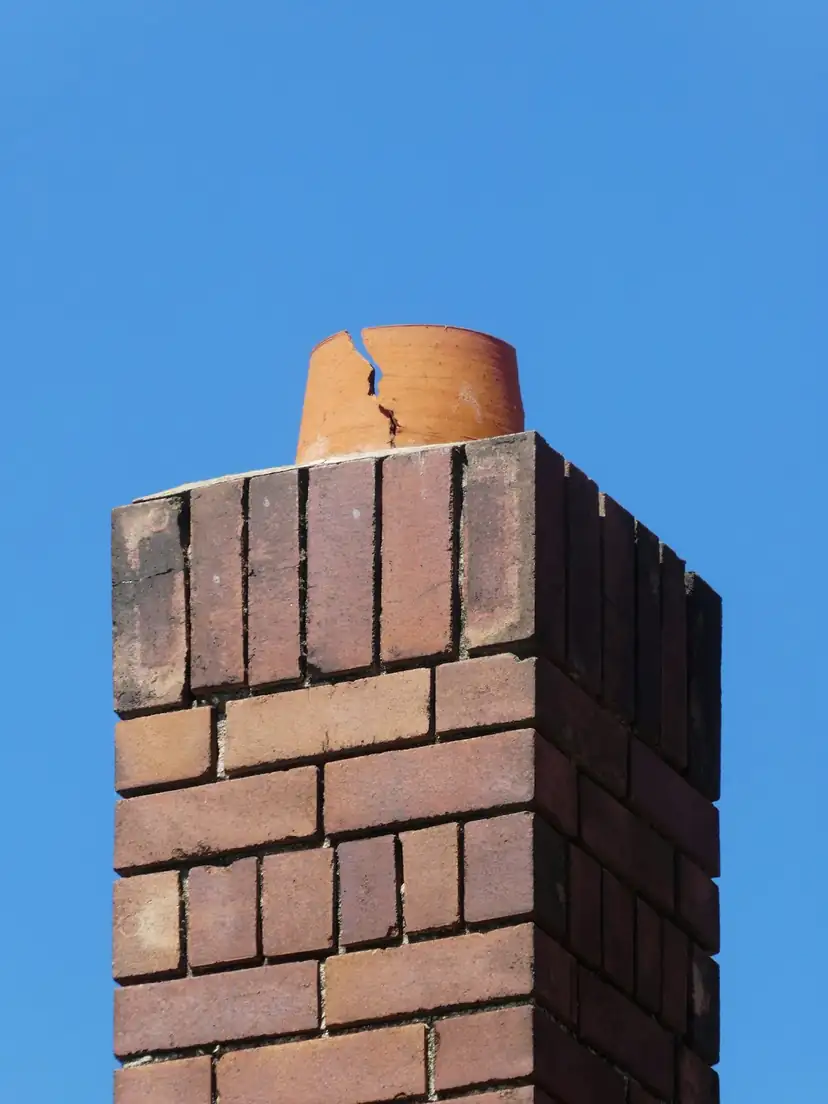
- A cracked or failed crown. Scope depends on crack depth, movement, slope, and surrounding masonry. See crown repair.
- Failed joints, efflorescence, or spalled brick. Masonry repair, tuckpointing, or brick replacement. See chimney masonry.
- Smoke entering the room, a carbon-monoxide alarm, or a gas odor. Evacuate and call 911. If you smell gas, do not operate switches or flames; call 911 and the gas utility from outside. Request inspection only after the property is cleared. See fireplace service.
Masonry stacks and factory-built chases
Brick chimneys and wood-framed chases need different repairs. We identify your system before recommending cap, cover, flashing or masonry work. A rusted metal cover over a factory-built fireplace is not repaired the same way as a cracked masonry crown.
Caps and covers are measured before replacement hardware is ordered. A factory-built chase may need work on the pan, seams or storm collar rather than a masonry crown repair. A damaged flue may need a compatible listed liner; extensive structural deterioration may require rebuilding rather than localized brick repair. Soot or creosote calls for a cleaning assessment, while appliance faults require the appropriate fireplace service.
West Palm Beach weather and chimney repair
Humidity, wind-driven rain and salt air contribute to open joints, rust and water stains. Flagler Drive and Singer Island stacks see more salt on metal; inland Greenacres, Royal Palm Beach, and Loxahatchee stacks more often fail at flat washes, open mortar, or factory lids after summer storms. We look at the condition of your chimney, not just the weather, before recommending leak repair, masonry work, replacement parts, relining or rebuilding.
Call (561) 830-5154 or use the free-estimate form for a free on-site inspection, then a written quote that names the failed part. South End cap work off S Dixie Hwy uses South End chimney cap replacement. Riviera Beach joint-only work uses Riviera Beach tuckpointing.
An unnamed stain on unincorporated acreage, once the street is confirmed, starts as leak repair in Loxahatchee.
What the written estimate includes
The estimate identifies the assessed system, proposed work, materials, access assumptions, exclusions, cleanup, available documentation, price, and the approval process if a newly exposed condition changes the scope.
A crown, flashing edge, chase cover, liner, and open mortar joints can produce similar signs of water intrusion. The scope names the affected component rather than bundling unrelated work.
When repair should not wait
- Active leak during or after rain. Protect interior finishes only if it is safe. Do not climb a wet roof.
- Loose or missing masonry above the roofline. Keep people away from the fall area and request an assessment.
- Smoke in the room or a carbon-monoxide alarm. Evacuate and call 911 first.
- Visible change after a severe storm. Photograph from a safe location and request inspection before using the system.
Call (561) 830-5154 to schedule the free inspection.
A stain after rain with no named part starts on chimney leak repair. The roof joint is chimney flashing repair. South End masonry off S Dixie Hwy uses South End chimney repair.
Palm Beach County stacks we actually see from S Dixie Highway
Chimney Repair West Palm Beach runs chimney repair from 1930c S Dixie Hwy, West Palm Beach, FL 33401. The shop sits on the South Dixie corridor, so the usual first stops are South End West Palm Beach Mediterranean Revival flues, Lake Worth Beach College Park and Old Town stacks, and Greenacres ranch chimneys west of Lake Worth Road.
A 1920s stucco chase in El Cid-adjacent South End housing is not the same job as a 1960s Greenacres block flue or a factory lid in a western Wellington tract. The free inspection names masonry or chase at that street address. The written estimate lists the failed crown, cap, flashing, or joints before anyone opens the stack.
Coastal salt versus inland humidity on a repair visit
Barrier-island and inlet lots — Palm Beach, Singer Island, Ocean Ridge, Highland Beach, Gulf Stream, Manalapan, South Palm Beach, Briny Breezes, and Jupiter Inlet Colony — rust caps, storm collars, and flashing faster than an inland Haverhill, Palm Springs, or Loxahatchee stack. Inland lots still fail: receded mortar, flat washes, and storm-driven rain through open joints.
We do not write a county-wide alloy or a one-size mortar spec from the ZIP. Exposure is a note on the proposal for that house. Call (561) 830-5154 with the street so the visit can be planned for roof height, gates, and whether the crew is looking at brick, stucco, or a factory chase.
How a West Palm Beach repair estimate is written
The visit reviews accessible crown, cap or chase cover, flashing, and masonry related to the reported crack, stain, or rust. Findings become a written estimate that names included work, materials, access assumptions, exclusions, and how a newly found condition is priced.
Leak diagnosis, a sweep, a rebuild, and fireplace damper work are different services when that is the actual question. Repair on this page is the defined masonry or termination job once the failed part is named.
ZIP and neighborhood cues we use on a repair dispatch
A 33401 South End or 33405 Flagler-lagoon address is not the same dispatch as 33415 Haverhill, 33409 Westgate, or 33470 Loxahatchee. Barrier ZIPs — 33480 Palm Beach, 33435 Ocean Ridge, 33487 Highland Beach, 33483 Gulf Stream, 33462 Manalapan — need salt and roof-height notes in the first call.
Neighborhood names help only as access cues: SoSo and College Park, PGA National and BallenIsles, Crestwood and Olympia, Point Manalapan and the A1A pine canopy. The written repair still names the stack on that lot.
- Coastal and inlet lots: rusted fasteners, failed stucco skins, and flashing that has lifted in wind-driven rain.
- Inland ranch and western tracts: receded mortar, flat washes, and factory lids after summer storms.
- Historic masonry: crown-to-flue joints and open courses that are past a paint-over.
Inspection, then a written repair quote — not a price list
Call (561) 830-5154 or send the form with the street, ZIP, fuel if you know it, and the crack, stain, or rust you want assessed. Chimney Repair West Palm Beach inspects the accessible masonry or chase first. You approve the named work, materials, and exclusions before anyone opens the stack.
A newly found condition after opening is a separate written price. This page does not publish a repair menu. If the room is filling with smoke, a carbon-monoxide alarm sounds, or gas is smelled, leave and use emergency channels first.
When a homeowner should call for repair — leak, crown, cap, or draft
Call chimney repair when you already see cracked stucco, receded mortar, a damaged wash, rusted flashing, or a loose cap. Call leak repair when a stain appears after rain and no part is named. Call for a cap when the screen is missing. Call a sweep when the wood flue smells or smokes on the first cool-season fire.
A fireplace that will not draft can be deposits, a stuck damper, or a failed top. The free inspection names which one. Call (561) 830-5154 or use the free-estimate form. Do not light a fire against a storm-damaged stack.
What a West Palm Beach repair quote is allowed to say
Searchers for chimney repair in West Palm Beach are usually looking at a stain, open joints, or a rusted top and do not yet know the part. Chimney Repair West Palm Beach uses the free inspection to name masonry or a factory chase at that address. The written quote lists the failed crown, cap, flashing, or joints, plus materials and exclusions.
A price is not published on this page because a South End clay-tile stack and a western chase lid are not the same job. Call (561) 830-5154 or send the form. Work starts after you accept the written quote. If the only evidence is soot, start on the sweep page instead of approving masonry.
Book a free inspection for the repair you need
Chimney Repair West Palm Beach provides a written masonry or chase repair estimate after a free inspection. Call (561) 830-5154 or use the estimate form. For water stains, soot buildup, or a missing cap, explore the relevant service below.
- Free estimate form
- Chimney leak repair
- Chimney flashing repair
- Chimney cap installation
- Chimney rebuild
- South End chimney repair
- Loxahatchee chimney repair
- Loxahatchee Groves repair
- Jupiter chimney repair
- Boynton Beach chimney repair
Town hubs that ask the same hiring question locally: South End, Boynton Beach, Wellington, Greenacres, Loxahatchee, Riviera Beach, Royal Palm Beach, Palm Beach Gardens, Loxahatchee Groves.