

The short answer
A South Florida chimney year is shaped by storm exposure, humidity, salt, intermittent fireplace use, and the installed system's requirements. Check visible condition from the ground after significant weather or material changes. Set inspection, cleaning, and repair timing from system guidance, use, condition, deposits, prior findings, and incidents rather than a fixed seasonal calendar.
A chimney year in South Florida runs on hurricane season, not on winter. The useful calendar here has four parts: get the chimney ready before June 1, leave it alone but watch it from June through November, assess what the season did once it ends, and use it during the handful of cool evenings that follow.
Most chimney maintenance calendars you will find online are built around a different climate. They tell you to prep in the fall for a long burning season, to stack firewood, to worry about frozen masonry. None of that describes a house in Palm Beach County, where the fireplace might get lit four times a year and the real damage arrives sideways in September.
Spring: The Work Window
This is the part of the year that matters most, and it is the part most people skip because nothing appears to be wrong.
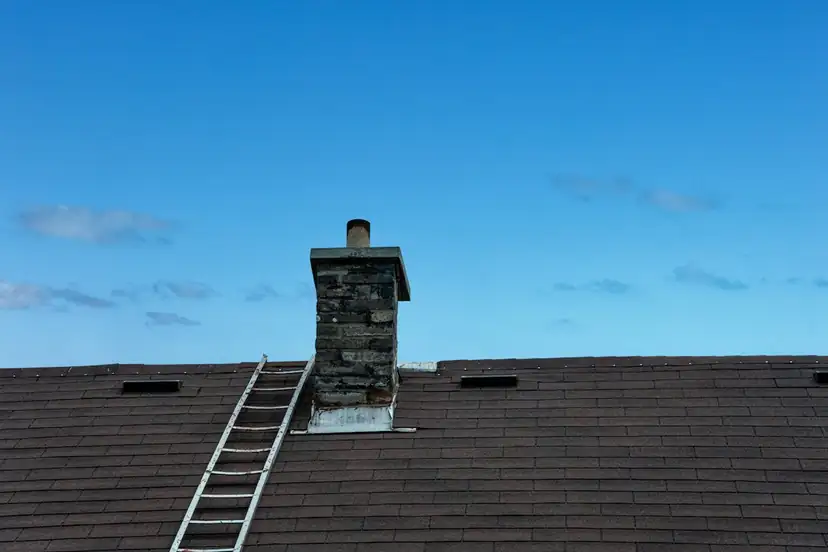
Everything that protects a chimney from a storm is a small component: the cap, the crown, the flashing, the mortar joints. Have these components inspected before storm season. Repair scope and cost depend on their condition, access, and materials, not the month alone. Spring is when you want the cap checked and fastened, the crown looked at for cracks, the flashing confirmed as lying flat and sealed, and any receding mortar joints repointed.
It is also the right time to trim back limbs that overhang or crowd the chimney. In high wind, a branch near the chimney is a projectile aimed at your crown.
If you only do one thing all year, do this one. Our guide to preparing your chimney for hurricane season covers the checks in detail, and it is worth photographing the chimney once the work is done so you have a dated record of its condition.
June Through November: Watch, Do Not Climb
Hurricane season runs June 1 through November 30. During it, the chimney is doing the hardest work of its year while you are doing the least.
This is not the time for rooftop projects. It is the time to notice things from inside the house. Wind-driven rain during tropical systems can enter joints and laps that ordinary vertical rain may not reach, so early evidence may appear indoors rather than on the roof.
Between storms, look for:
- A stain or damp patch on the ceiling or wall near where the chimney passes through
- A musty or sour smell from the firebox that gets stronger after rain
- Damp brick, standing water, or debris in the firebox
- Rust streaks appearing on the outside of the chimney
- Anything visibly out of place after a named storm, checked from the ground
If a storm passes over you, do a deliberate pass afterward rather than assuming no news is good news. What to check after a storm covers what to look for.
December: The Honest Assessment
Once the season closes, you find out what it did. This is the natural point for a condition-based chimney inspection, because the chimney has just been through everything the year had to throw at it and, conveniently, this is also just before the few weeks you might actually want to light a fire.
An inspection now catches the cap that loosened in September, the flashing that lifted, the crown that took a hit. Fixing those in December means going into the next spring with a chimney that is already sound, rather than discovering the problem in May when everyone else is booking the same work.
The Cool Evenings: Actually Using It
Our fireplace season is short, roughly the cooler stretch from December into February, and it is measured in evenings rather than months. That brevity creates a specific local problem: because the fireplace sits unused for most of the year, whatever is wrong with it goes unnoticed until the one night you want it.
A few habits make those evenings better and safer:
- Do not light the first fire of the season blind. If it has not been looked at since last year, have it checked first. Unused flues are where animals nest.
- Watch your wood. Our humidity works against seasoning. Wood stored outdoors here absorbs moisture from the air, so even wood you think is dry can burn cool and dirty. Keep it off the ground, cover the top of the stack, leave the sides open, and bring a day's supply inside ahead of time.
- Follow the installed system's instructions. Fuel, loading, air controls, doors, dampers, and operating limits vary by appliance and venting system.
- Treat smoke as an emergency. If smoke enters the home, a carbon-monoxide alarm sounds, or a chimney fire is suspected, evacuate and call 911. Arrange service only after responders clear the property.
Year-Round Factors: Humidity and Salt
Humidity and salt exposure can affect chimney materials throughout the year.
Our masonry rarely dries out. Humidity keeps a chimney damp for most of the year, so water that gets into a joint keeps working on it continuously instead of cycling wet and dry the way it would in a drier climate. That is why a small crack matters more here, and why efflorescence, the chalky white staining, shows up on so many local chimneys.
Salt exposure and retained moisture can accelerate corrosion, but the appropriate metal depends on the installed system, measured exposure, dimensions, fabrication, fastening, code, manufacturer guidance, and project requirements. Two chimneys of similar age can differ substantially because exposure and maintenance differ.
The Whole Year in Four Lines
- Spring. Fix the cap, crown, flashing and joints. Trim overhanging limbs. Photograph everything.
- June through November. Watch from inside. Check from the ground after storms. Stay off the roof.
- After significant weather or before uncertain use. Use condition, system guidance, prior findings, and incidents to decide whether inspection or cleaning is needed.
- Cool evenings. Follow the installed system's fuel and operating instructions, and do not light a fire when the history is unknown or a warning sign remains unresolved.
For non-emergency chimney or fireplace service in West Palm Beach, call (561) 830-5154 to request a free inspection and written estimate. Request a written estimate with materials, exclusions, and any applicable warranty terms before approving work. Review chimney repair for service details.
Need chimney or fireplace help in West Palm Beach?
Call with the property ZIP code and a short description of what you see.
Call (561) 830-5154