Why a gas appliance needs a different liner than a wood one
Burning gas produces water. A great deal of it. Water vapor is one of the main products of burning natural gas or propane, and it goes up the flue with the exhaust. It also goes up cooler than a wood fire's smoke does, because a gas appliance is built to put its heat into the room rather than up the chimney. Put those two facts into a masonry flue that was sized for an open wood fire and the exhaust has far more space than it needs: it slows down, cools past the point where that water condenses, and runs back down the inside of the flue as a mildly acidic liquid.
That is the whole difference between the two fuels. Wood leaves a combustible deposit on the flue. Gas leaves a wet one. Over seasons it erodes mortar joints and the face of clay tile from the inside, and once it has worked through the masonry it shows up indoors as staining or a chalky white bloom on the chimney breast, and that is usually the first anyone hears about it.
So a gas liner is sized to the appliance, not to the chimney. The manufacturer's instructions give a diameter and a maximum vent height for that specific model, and a flue larger than that is not a safety margin; the oversizing is the failure. Material is a second decision on top of it. A stainless liner suits an ordinary atmospheric gas appliance, while a high-efficiency unit that deliberately sends its exhaust out cool and wet needs a liner rated for condensing service. Aluminum liner turns up in older installations and is only acceptable on certain draft-hood appliances rather than as a general answer. A liner specified for a wood fire is the wrong part on every one of those counts, which is why relining is so often a genuine part of putting gas into an old chimney rather than something bolted onto the estimate.
A pilot that will not stay lit
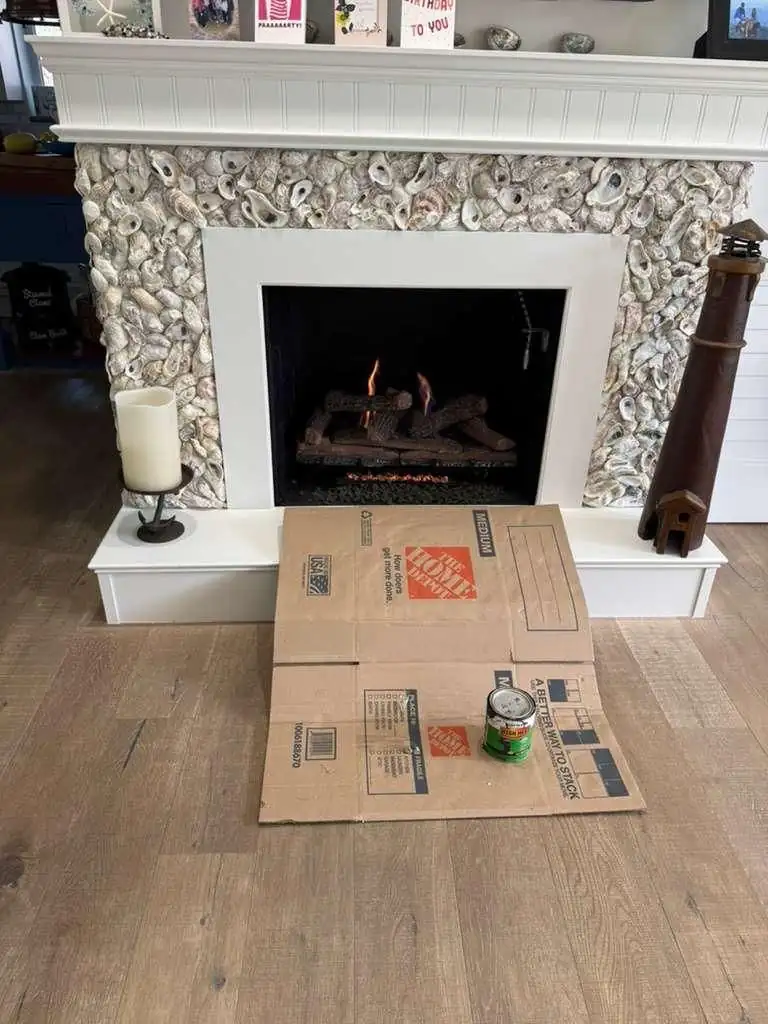
On a standing-pilot system the pilot flame has a second job beyond lighting the burner. It heats a small sensor (a thermocouple, or a thermopile on units that also power a wall switch), and the tiny current that sensor generates is the only thing holding the safety valve open. Take the heat off it and the valve shuts. That is the system working exactly as designed, which is worth remembering before anyone suggests working around it.
A pilot that lights, burns happily while you hold the knob in, and dies the moment you let go is therefore almost always a sensing problem rather than a gas-supply problem. Roughly in the order worth checking: a pilot orifice partly blocked by dust, lint or a spider's web, so the flame is small or wandering and no longer wraps the sensor tip; a sensor that has aged and no longer makes enough current to hold the valve; a loose or corroded connection where the sensor lands at the valve, which salt air and humidity encourage; and, less often, a valve whose holding magnet has given up. On electronic ignition the equivalent faults are a dirty flame-sensing rod, a poor ground, or a module that has stopped sparking.
There is a second family of causes with nothing to do with the pilot assembly at all. If the vent is blocked, or the appliance is spilling exhaust back into the room, a safety switch can shut the whole thing down and the symptom can look identical from the hearth rug. Stop using an appliance that shows soot, flame rollout, venting concerns, or repeated shutdowns. If a carbon-monoxide alarm sounds, evacuate and call 911 from outside. If you smell gas, do not operate switches, electronics, or flames; evacuate, then call 911 and the gas utility from outside. Contact a contractor only after responders or the utility clear the property as safe.
Venting types, and the clearances that come with them
Three arrangements cover almost every gas fireplace in Palm Beach County, and which one you have decides what a repair is even allowed to be.
- Direct-vent, or sealed. One pipe inside another: combustion air comes in from outdoors and exhaust leaves through the same terminal, with the firebox closed off from the room by a fixed glass front. That glass is part of the seal, not a window. Running the unit with cracked glass, a flattened gasket, or a frame that has not been latched down breaks the combustion seal it was certified with.
- B-vent, or natural vent. The appliance takes its combustion air from the room and exhausts vertically through double-wall metal pipe, usually under a draft hood. It depends on the vent being warm and clear in order to work at all, which makes the vent run and the terminal the parts worth attention on it.
- Vent-free. Exhausts into the room. Where these are permitted at all the rules about room volume, and about bedrooms and bathrooms, are strict. It is the one category where what your jurisdiction allows should be settled before anything is bought.
Clearances here are not rules of thumb. They come from the appliance's own listing, and so does the pipe: vent pipe is certified as a system with the appliance, so mixing one manufacturer's pipe into another's unit voids the listing even when the parts fit together perfectly. Outside, the termination has its own required distances from windows, doors, soffits, decks and grade, and those are the ones broken quietly around here, whether by an addition built out over an old termination, a screen enclosure put up around it, or landscaping grown across it. None of that existed when the appliance was installed, and all of it changes the installation.