

How chimney flashing repair is scoped
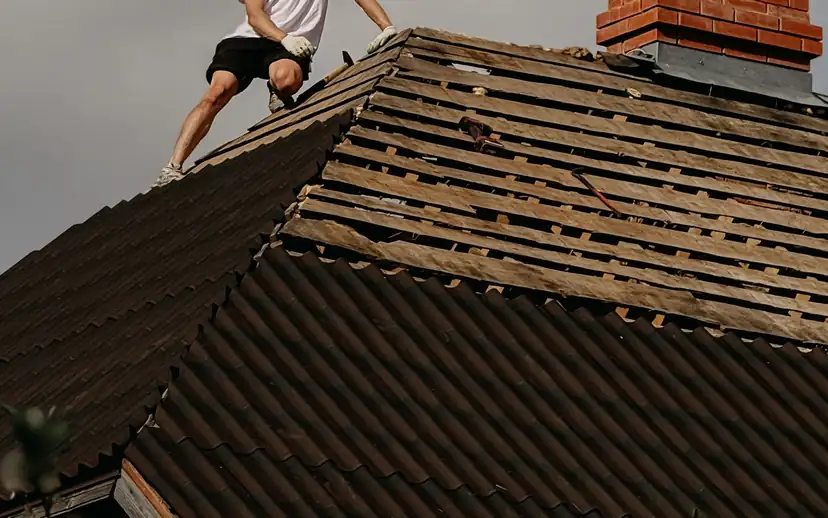
Flashing seals the joint where the chimney meets the roof. A useful assessment checks the step flashing, counter flashing, apron or saddle, nearby roofing, masonry joint, and sealants before recommending repair or replacement.
Localized separation may support a limited repair. Corroded metal, repeated leaks, or failure across several sides may make a complete flashing replacement the more practical scope. Roof pitch, chimney dimensions, access, roofing type, and the selected metal all affect the written estimate.
Local symptoms on West Palm Beach and coastal roofs
- Ceiling stain beside the chimney after an east wind on South End and Lake Worth Beach lots—often lifted step flashing or an open counter-flashing joint, not always the crown.
- Rust streaks at the roof-to-stack line on barrier-island and inlet roofs where salt accelerates fastener and apron failure.
- Repeated reseals that still drip when the metal itself is corroded or the cricket/saddle has failed.
- Tile or shingle edges that have backed away from the chimney, leaving a path for wind-driven rain.

Materials for coastal West Palm Beach roofs
Galvanized steel, stainless steel, and copper are common options. Coastal exposure, the existing roof system, appearance, budget, and compatibility with adjacent materials should guide the choice. The assessment should explain why a proposed material fits the property instead of making a fixed durability promise.
What to expect before work begins
Ask for a written scope that identifies the suspected leak path, the components to be repaired or replaced, the material, weather limitations, price, and any applicable warranty terms. If hidden damage changes the scope after work begins, approve that change in writing before additional work proceeds.
Free inspection, then the named flashing piece
A stain after rain does not name step flashing, counter flashing, or a cricket. The roof visit writes the failed piece and the metal for that exposure. The inspection and written flashing quote are free. You approve that scope before shingles or tile are opened.
When the stain could be the roof joint, the crown, or the cap, the first visit is chimney leak repair. That inspection names the failed part before flashing metal is opened.
Where flashing actually fails on Palm Beach County roofs
Chimney Repair West Palm Beach inspects chimney flashing from 1930c S Dixie Hwy, West Palm Beach, FL 33401. The usual stain is on a ceiling beside the stack after a summer storm — South End Mediterranean roofs, Lake Worth Beach College Park, Greenacres ranches, and Palm Springs lots off Congress Avenue.
Step flashing, counter flashing, an apron or saddle, and the masonry joint are different pieces. A rust streak at the roof line is not a diagnosis. Barrier-island roofs in South Palm Beach, Briny Breezes, Ocean Ridge, and Jupiter Inlet Colony add salt to the same joint. The free inspection names the failed piece at that address.
Coastal salt versus inland storm rain at the roof joint
A1A and inlet lots rust galvanized step flashing faster than an inland Haverhill or Village of Golf ridge. Inland CBS ranches still leak: lifted step flashing after wind, dried sealant, or a counter-flashing joint that has opened.
We do not write a county-wide metal from the ZIP. Exposure is a line on the proposal for that house. Call (561) 830-5154 with the street so the visit can plan roof pitch, tile versus shingle, and whether a roofer must be coordinated.
How a flashing estimate is written from S Dixie Highway
The visit reviews accessible step and counter flashing, the cricket or saddle if present, adjacent roofing, and the masonry or chase joint related to the reported stain. Findings become a written estimate that names included metal, material, weather limits, exclusions, and how a newly found condition is priced.
A missing cap, a cracked crown, and a flashing leak can share one stain. Those are different services when that is the actual question. This page is the roof-to-stack joint once that path is named.
ZIP cues we use on a flashing dispatch
A 33401 South End or 33405 Flagler-lagoon roof is not the same dispatch as 33461 Palm Springs or 33436 Village of Golf. Barrier ZIPs — 33480 South Palm Beach, 33435 Briny Breezes and Ocean Ridge, 33469 Jupiter Inlet Colony — need salt and height notes in the first call.
Association roofs in South Palm Beach towers and Highland Beach need who holds the roof key. Manufactured-home jacks in Briny Breezes are a different flashing geometry than a 1920s masonry cricket.
- Coastal and inlet lots: rusted step flashing, lifted counter flashing, and salt at fasteners.
- Inland ranch and western tracts: dried sealant, wind-lifted step pieces, and open masonry joints at the roof.
- Towers and manufactured homes: rooftop access and the actual jack or curb, not a brick-chimney kit.
Inspection, then a written flashing quote — not a price list
Call (561) 830-5154 or send the form with the street, ZIP, and which room stains when it rains. Chimney Repair West Palm Beach inspects the accessible roof joint first. You approve the named metal, material, and exclusions before anyone opens shingles or tile.
A newly found rotten deck or hidden cricket after opening is a separate written price. This page does not publish a flashing menu. If fire or smoke is inside, or a carbon-monoxide alarm sounds, leave and use emergency channels first.
Step, counter, and saddle — the pieces a stain does not name
A ceiling mark beside the chimney can be lifted step flashing, an open counter-flashing joint, a failed cricket, or a crown that is not this page. The roof visit names the piece before anyone reseals from the ground.
Call (561) 830-5154 with the room that stains and the street. The free inspection writes the metal, material, and weather limits. You approve that flashing quote before shingles or tile are opened.
Flashing is the roof joint, not the crown
Chimney flashing repair in West Palm Beach is step and counter-flashing where the chimney meets the roof. A ceiling stain can also start at a cap, a crown, or a chase cover. The free inspection says which joint is open before metal is cut.
The written quote names the roof type, the elevations included, and what is excluded. Call (561) 830-5154. Leak repair remains the start when no joint has been named yet.
Flashing repair in West Palm Beach is the roof joint
Chimney flashing repair in West Palm Beach, including company and near-me searches, is step and counter-flashing where the chimney meets the roof. A ceiling stain can also start at a cap, a crown, or a chase cover. The free inspection says which joint is open before metal is cut. Call (561) 830-5154.
The written quote names the roof type, the elevations included, and what is excluded. Leak repair remains the start when no joint has been named yet. South End, Loxahatchee, and Delray Beach already have local flashing leaves when the street is in those places. This page is the county owner for the same joint.
Flashing repair is the roof joint
Chimney flashing repair in West Palm Beach is step and counter flashing where the chimney meets the roof. Chimney Repair West Palm Beach inspects that joint from 1930c S Dixie Hwy. A ceiling stain can also start at a cap, a crown, or a chase cover. The free inspection says which joint is open before metal is cut. A ground photo of a rust streak is not a diagnosis.
Call (561) 830-5154. The written quote names the roof type, the elevations included, the metal, weather limits, and exclusions. Leak repair remains the start when no joint has been named yet. South End, Loxahatchee, and Riviera Beach already have local flashing leaves. This page is the county owner for the same joint.
Step flashing, counter flashing, and the cricket
Step flashing is the pieces woven with the shingles or tile. Counter flashing covers that joint against the chimney. An apron, saddle, or cricket sheds water above the stack on the high side. Those are different pieces. Resealing from the ground does not name which one failed. The roof visit writes the piece before anyone opens shingles or tile.
Tile and shingle roofs do not share one flashing detail. A manufactured home jack in Briny Breezes is a different geometry than a 1920s masonry cricket in the South End. Association roofs need who holds the key. The written scope lists that assumption.
Coastal salt versus inland storm rain at the joint
Barrier and inlet lots rust galvanized step flashing faster than an inland Haverhill or Village of Golf ridge. Inland concrete block ranches still leak when wind lifts a step piece or a counter flashing joint opens. Exposure is a line on the proposal for that house. It is not a county wide metal spec.
A missing cap and a flashing leak can share one stain. Those stay separate services when the inspection names both. This page is the roof to stack joint once that path is the failed part. Waterproofing is not a substitute for open metal.
What the written flashing quote names
Call (561) 830-5154 with the street and which room stains when it rains. You approve the named metal and exclusions before the roof is opened. A newly found rotten deck or a hidden cricket is a separate written price. This page does not publish a flashing menu.
Chimney Repair West Palm Beach, 1930c S Dixie Hwy, West Palm Beach, FL 33401, writes the joint after the roof level inspection. A later drip after approved flashing work is a new visit. It is not a promise the chimney stays dry from the ZIP code.
Repair the chimney and roof connection
Flashing is the chimney-to-roof metal, not a crown or a cap. Call (561) 830-5154 for a free inspection and a written flashing scope. A stain with no named joint still starts as leak diagnosis.
- Free estimate form
- South End flashing repair
- Loxahatchee flashing repair
- Riviera Beach flashing repair
- Leak repair
- Chimney cap
- Crown repair
- Chimney rebuild
- Chase cover repair
- Chimney relining
Town hubs that ask the same hiring question locally: South End, Loxahatchee, Riviera Beach, Ocean Ridge.