Common chimney problems in West Palm Beach homes.
Spot chimney problems and find the right service.
- Local West Palm Beach team
- Over 10 years of experience
- Insured
- Free inspection & estimate


Request an assessment for a West Palm Beach chimney problem.
Describe the warning signs you are seeing and ask about current assessment availability. Call (561) 830-5154 or submit the form.
Fourteen chimney problems, and what each one means here.
These warning signs can help describe the problem when booking an assessment. They do not establish a diagnosis or fixed repair outcome by themselves.
Cracked Chimney Crown
Cracks or missing material at the chimney top
The crown helps shed water away from the flue and masonry. Surface wear, movement, poor slope, prior coatings, or weather exposure can contribute to visible cracking or deterioration.
- Visible crown cracks
- Missing crown material
- Water staining below the crown
- Deterioration in the upper masonry
A roof-level assessment can distinguish monitoring, compatible coating, localized repair, and rebuilding. The written scope should state the observed condition and selected material.
Rain, humidity, and coastal exposure are relevant conditions to consider when evaluating a West Palm Beach chimney crown.
Damaged Roof Flashing
The chimney-to-roof joint may be admitting water
Step flashing, counter flashing, roofing, sealants, and masonry meet at this joint. Separation, corrosion, movement, or an incomplete detail can create a water-entry path.
- Interior staining near the chimney
- Visible gaps at the roof joint
- Lifted or corroded metal
- Moisture appearing during rain
An onsite assessment should identify the suspected entry path before resealing, localized repair, or flashing replacement is proposed.
Wind-driven rain can expose flashing and roof-interface defects that are not obvious from the ground.
Creosote Buildup
Combustible residue inside a wood-burning flue
Creosote can form when wood-smoke byproducts condense in the venting system. Its amount and condition depend on fuel, burning practices, venting, temperature, and use.
- Black deposits in the firebox or flue
- Acrid fireplace odor
- Reduced draft
- Glazed-looking residue
A qualified inspection can identify the accessible deposit condition and recommend an appropriate cleaning method. Do not burn a fire to test a suspected blockage.
Long idle periods and humid conditions can affect fireplace odor, but odor alone does not establish the cause.
Spalling Brick
Brick surfaces are flaking or breaking away
Spalling can involve absorbed moisture, salts, incompatible mortar or coatings, impact, movement, or material deterioration. The source and depth of damage should be assessed before repair.
- Brick fragments below the chimney
- Flaking brick faces
- Open or recessed mortar joints
- White surface deposits
The repair may involve selected brick replacement, compatible mortar work, source repair, or a suitable masonry treatment. Scope depends on the observed assembly.
Coastal exposure and frequent rain are relevant to material selection, but no single mortar or coating is automatically correct.
Chimney Leaks
Water may be entering through one or more components
Possible entry points include the crown, flashing, cap, mortar, chase cover, roofing, or another nearby detail. Interior stain location alone may not identify the source.
- Water in the firebox
- Ceiling or wall staining
- Damp odor near the fireplace
- Exterior efflorescence or staining
Diagnosis may require exterior, roof-level, interior, or controlled water testing where appropriate. Repair should target the supported source rather than a guessed component.
Wind-driven rain can make leak paths intermittent, so timing and weather observations are useful when booking an assessment.
Blocked Flue
An obstruction may restrict safe venting
Debris, nests, deposits, damaged liner material, or another obstruction can interfere with venting. Smoke entering the room or a carbon-monoxide alarm is an emergency condition.
- Smoke entering the room
- A carbon-monoxide alarm
- Debris in the firebox
- Unusual draft or combustion behavior
For smoke entering the home or a carbon-monoxide alarm, evacuate and call 911 first. Contact a chimney contractor only after responders say the property is safe.
Do not use the fireplace until the venting path and any related damage have been appropriately evaluated.
Damaged Chimney Liner
The flue liner may be cracked, corroded, or disconnected
Liner concerns can affect heat containment, venting, and appliance compatibility. The appropriate evaluation and repair depend on the existing liner, fuel, appliance, dimensions, and accessible condition.
- Liner fragments in the firebox
- Visible cracks, gaps, or corrosion
- Draft problems after cleaning
- Heat or odor concerns near the chimney
A detailed assessment can define whether localized repair, relining, appliance-specific work, or another scope is appropriate. Materials should be selected for the actual system.
No stainless alloy or lining method is automatically correct for a West Palm Beach chimney without checking the system.
Draft Problems
Combustion products are not moving up the flue as expected
Possible factors include obstruction, chimney configuration, appliance setup, indoor pressure, exhaust fans, air supply, weather, or damage. The cause should not be assumed from one symptom.
- Smoke entering the room
- Difficulty establishing draft
- Downdrafts when unused
- Unexpected combustion behavior
For smoke entering the home, evacuate and call 911 first. After responders say it is safe, an assessment can consider the flue, appliance, air pressure, and configuration.
Do not rely on opening a window or warming the flue as a safety test when smoke is already entering the home.
Damaged or Missing Chimney Cap
The flue opening may be exposed to rain, debris, or animals
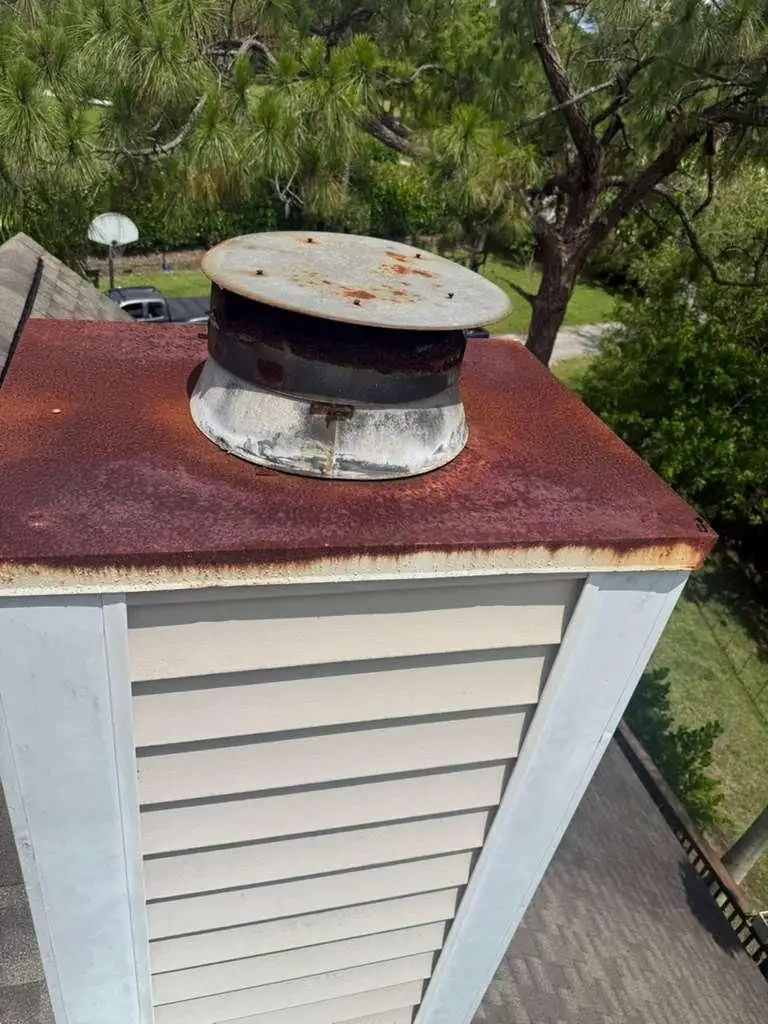
A cap can be missing, displaced, corroded, damaged, or poorly fitted. The correct replacement depends on flue dimensions, venting, material compatibility, and applicable requirements.
- Cap missing or visibly displaced
- Rust or loose components
- Water or debris in the firebox
- Animal activity near the flue
A roof-level measurement and system check should come before repair or replacement. The proposal should identify the material, attachment, fit, and exclusions.
Coastal exposure is one consideration in material selection, not a reason to impose one metal specification without checking the property.
Animal Intrusion
Wildlife or nesting material may be inside the chimney
Birds, mammals, or bats may enter an open or damaged chimney. Species, nesting status, access, and local requirements can affect the appropriate response.
- Scratching or chirping
- Nesting material
- Animal odor
- Visible animal activity
Do not light a fire. Keep the damper or fireplace opening closed when safe and contact an appropriately qualified wildlife or chimney professional. Removal and exclusion scope depends on the species and conditions.
Identify the animal and applicable removal requirements before choosing a response.
Mortar Joint Failure
Mortar joints are recessed, loose, cracked, or missing
Joint deterioration can involve moisture, movement, age, incompatible prior repairs, or material exposure. Loose masonry and a visibly leaning chimney require additional caution.
- Open or recessed joints
- Mortar debris below the chimney
- Loose brick
- Visible leaning or movement
Stay clear of a leaning chimney, falling masonry, or partial collapse and call emergency services. For non-emergency deterioration, an assessment can define compatible repointing, brick repair, or structural review.
Historic masonry may require matching and preservation review; mortar selection should match the existing assembly.
Smoke Chamber Cracks
The transition above the firebox may be damaged
Accessible cracks, gaps, deterioration, or deposits in the smoke chamber can warrant further evaluation. The repair depends on material, access, depth, and related venting conditions. Book smoke chamber repair when the opening is masonry and the throat or smoke shelf is the named defect.
- Visible smoke-chamber cracks
- Combustion odor outside the fireplace
- Deposits in unexpected areas
- Smoke entering adjacent spaces
For smoke entering the home, a carbon-monoxide alarm, or fire, evacuate and call 911 from outside first. For a non-emergency cracked throat or packed smoke shelf, request a free smoke-chamber inspection and written estimate.
Smoke-chamber work should be tied to documented accessible conditions rather than a fixed repair recipe.
Stuck or Missing Damper
The throat plate will not travel, seat, or is gone
A damper that sticks, will not close, is warped, or is missing can leak room air, hold odor, or change how a short fire behaves. A listed gas valve is a different page.
- Plate will not open or close
- Room air leaking up the flue
- Odor through a plate that never seats
- Missing or rusted throat hardware
Request a free damper inspection. Repair or replacement is written after the visit names the hardware. Do not force a seized plate from the room.
Coastal rust and inland idle seasons both bind plates; the part is still named on that opening.
After a Chimney Fire
Heat may have reached the flue, damper, liner, or masonry
A flue fire or a fire that reached the stack is not a routine sweep. Active fire, indoor smoke, or a carbon-monoxide alarm is an emergency. Later inspection names heat-affected parts.
- A known flue fire
- Puffy or glazed creosote after that event
- Warped damper or cracked flue tile
- Insurer asking for written chimney findings
If fire or indoor smoke is still present, evacuate and call 911. After responders clear the property, request a free post-fire inspection and written estimate. Insurance coverage is the insurer’s decision.
A sooty idle flue with no fire event is still a sweep until the inspection finds heat damage.
The short answer
Common chimney symptoms can involve water entry, masonry deterioration, venting, deposits, damaged components, or wildlife. The same symptom may have more than one cause, so use the warning signs below to decide when to seek an assessment—not as a substitute for an onsite diagnosis.
Start with the symptom, then confirm the cause
Record when the symptom occurs, what weather or appliance use was happening, and any visible staining, debris, odor, sound, or movement. Photographs from a safe location can help. Stay off the roof and do not use the fireplace to reproduce a problem.
Ask the contractor to separate observed conditions from possible causes, then put the proposed assessment or repair scope, exclusions, materials, and price in writing. Approve any change caused by hidden conditions before additional work proceeds.
For fire, smoke entering the home, or a carbon-monoxide alarm, evacuate and call 911 from outside first. For gas odor, do not operate switches, electronics, or flames; evacuate, then call 911 and the gas utility from outside. For a leaning chimney, falling masonry, or collapse, stay clear and call emergency services. Contact a contractor only after the property is cleared as safe.