


Mortar repair has one job: restore failed chimney joints
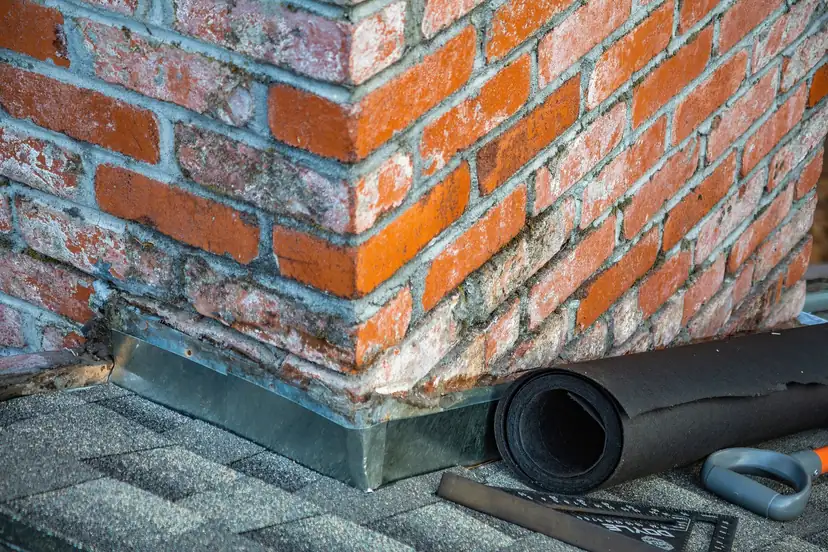
Chimney tuckpointing—often searched as chimney mortar repair or repointing—removes deteriorated mortar from selected joints and replaces it with a compatible mortar. It is not a coating over the chimney, a substitute for brick replacement, or a way to hide movement. The first decision is whether the visible failure is actually in the joints or in the surrounding brick, crown, flashing, or structure.
Signs that point toward a mortar-joint scope
Open joints, shallow missing sections, powdering mortar, separated prior patches, and water tracking along joint lines can support a tuckpointing assessment. A leaning stack, displaced masonry, widespread face loss, or cracks that continue through brick may require a broader masonry or structural scope. Photographs help with initial routing, but height, roof access, and close inspection determine the repair boundary.
How much mortar should be removed
New mortar needs a sound, clean joint rather than a thin smear over loose material. The required depth depends on what remains after deteriorated mortar is removed, the joint geometry, and the planned repair system. The written scope should describe the work area and removal approach without promising a universal depth before the masonry is examined. Adjacent brick faces and edges should not be treated as expendable simply to speed removal.
Mortar compatibility matters more than a color swatch
Color and joint profile affect appearance, but compatibility also includes strength, movement, vapor transmission, aggregate, exposure, and the condition of the existing masonry. A mortar that is unnecessarily hard can shift stress into older or softer brick. A proposal should identify the intended mortar approach and realistic matching limits; age, weathering, and material availability can prevent an invisible repair.
Tuckpointing versus brick repair, restoration, and rebuild
Chimney masonry repair addresses cracked, loose, or spalled brick as well as damaged joints. Chimney restoration coordinates connected problems involving joints, brick, the crown, flashing, and water entry. A chimney rebuild may be needed when a substantial portion of the stack has lost stability or cannot be saved through selective repair. The assessment should explain which materials can stay and which need repair or replacement.
Water entry should be traced before repointing is treated as the whole answer
Failed joints can admit water, but they may not be the only entry path. Crown cracks, open flashing, an unsuitable cap, roof details, and porous or previously coated masonry can produce similar interior evidence. Tuckpointing repairs the joints included in the proposal; it does not correct a separate roof or chimney-top defect unless that work is expressly included. Any water-repellent treatment is considered only after compatible repairs and must allow the masonry system to release vapor as intended.
West Palm Beach weather affects scheduling and curing
Heat, direct sun, humidity, wind, and sudden rain affect surface preparation, moisture control, placement, protection, and curing. The schedule should follow the selected material instructions and actual site conditions rather than a fixed promise made before the work area is seen. Ask how the team will protect fresh joints and what conditions would postpone placement.
What to put in a chimney tuckpointing estimate
A useful estimate identifies the elevations or joint areas included, access assumptions, protection, removal and placement approach, mortar and joint profile, excluded brick or structural work, treatment of concealed deterioration, cleanup, curing instructions, and any applicable written warranty terms. That makes it possible to compare a focused mortar-joint proposal with a broader restoration recommendation without paying twice for the same area. Local joint-work leaves exist for Riviera Beach, Palm Beach Gardens, and Greenacres.
Receded joints on sound Palm Beach County brick
Haverhill and Westgate mid-century block, Riviera Beach mainland stacks, Gulf Stream 1920s estates, and Boynton ranch chimneys lose mortar to humidity and storm rain while the units themselves may still be sound. Chimney Repair West Palm Beach writes those courses from 1930c S Dixie Hwy.
Tuckpointing is joint removal and replacement. A lean, lost faces, or movement is a rebuild conversation. A sealer is not mortar.
When to call for joints versus a rebuild
Call tuckpointing when you can rake out failed joints and the brick or block can stay. Call rebuild when courses will not carry a localized repair.
The written estimate names which joints are included, mortar match, protection for occupied rooms, and whether a crown or flashing defect is separate. Call (561) 830-5154.
Inland humidity and coastal salt on the same trade
Inland joints recede after humid summers. Oceanfront joints weather faster on the windward face. The mix still follows the masonry on that house, not a city-wide color chip.
- Sound brick with failed joints stays on this page.
- Loose units or a failed crown need a different written plan.
- Waterproofing waits until open joints are named.
Streets where joint work is the usual first call
33415 Haverhill, 33409 Westgate, 33404 Riviera Beach mainland, and 33483 Gulf Stream are typical tuckpointing dispatches. Western factory chases more often need a lid, not mortar.
Chimney Repair West Palm Beach does not publish a joint-work menu. Photos help. The joints included are confirmed on site.
Free inspection, then a written tuckpointing quote
Call (561) 830-5154 or use the free-estimate form with the street and a photo of the joints if it is safe. You approve the named courses before anyone opens mortar.
Loose masonry above the roofline: keep people away from the fall area and request an assessment. Do not light a fire against an open stack.
The shop at 1930c S Dixie Hwy, West Palm Beach, FL 33401 writes the courses after the free inspection. You approve the named joints, mortar match, and exclusions before anyone opens mortar. A sealer is not a substitute for failed joints.
When a homeowner should call for tuckpointing
Call tuckpointing when mortar has receded and the brick or block can stay. Call rebuild when the stack leans, has lost faces, or already failed a patch. Call leak repair when a stain appears after rain and no joint failure is named yet.
Haverhill 33415, Westgate 33409, Riviera Beach mainland, and Gulf Stream 33483 are typical joint-work streets. Call (561) 830-5154 with the street and a photo of the joints if it is safe to take one from the ground.
Joints only, when the brick can stay
Tuckpointing replaces failed mortar on sound masonry. Call (561) 830-5154. A lean or lost faces is a rebuild conversation.
- Free estimate form
- Riviera Beach tuckpointing
- South Palm Beach tuckpointing
- Palm Beach tuckpointing
- Cloud Lake tuckpointing
- Chimney repair
- Chimney rebuild
- Waterproofing
Town hubs that ask the same hiring question locally: Riviera Beach, Haverhill, Westgate, Gulf Stream, South Palm Beach, Palm Beach.