

The short answer
Signs of chimney water damage appear inside and outside at once: brown rings on the ceiling near the chimney, a musty smell at the firebox, rust on the damper, white efflorescence streaking the brick, receding mortar joints, and flaking brick faces. Both sets are the same problem seen from two sides, and the entry point is often above.
Your chimney spends its entire life exposed to the weather, and in South Florida that means relentless humidity, salt-laden coastal air, intense sun, and the heavy rains and wind-driven moisture that come with hurricane season. Over time, water finds its way into the smallest cracks and gaps. Caught early, water intrusion is a straightforward fix. Left alone, it quietly rots away the materials that hold your chimney together, and the repair bill grows accordingly. Knowing what to look for can help you address a developing problem before its scope grows.
Why Water Is a Chimney's Worst Enemy
Brick, mortar, and concrete are porous. They absorb moisture like a sponge, and once water gets inside, it expands and contracts with temperature swings, slowly breaking the masonry apart. In our coastal climate, repeated wet and humid conditions can continue through much of the year: muggy days, sudden downpours, and salt air all accelerate deterioration. Water also corrodes the metal components inside your chimney and can travel into your home's framing, drywall, and insulation. Because much of this damage happens out of sight, the visible warning signs are your earliest and most valuable clue that something is wrong.
Warning Signs You Can See From Inside the House
You don't need to climb on the roof to catch the first symptoms. Several telltale signs show up right in your living space.
Stains on Walls and Ceilings
Brownish or yellowish discoloration on the ceiling or wall around the chimney is a classic sign of a leak. These stains often appear after heavy rain and may grow or darken over time. Even a faint ring is worth investigating, because by the time moisture reaches your interior finishes it has usually been traveling through the structure for a while.
A Musty or Damp Smell
If your fireplace gives off a musty, earthy odor, especially during humid weather, trapped moisture is the likely culprit. That dampness encourages mildew and mold growth inside the flue and firebox, which is both an unpleasant smell and a sign that water is lingering where it shouldn't.
Rust and Corrosion
Take a look at the damper and any visible metal components. A damper that is stiff, squeaky, or showing orange rust is telling you that water has been reaching it. Rust stains inside the firebox point to the same problem. Metal parts are designed to stay dry, so corrosion is a clear red flag.
Damaged Masonry and Peeling Surfaces
Watch for paint or wallpaper peeling near the chimney, crumbling areas on the firebox, or white, chalky deposits on the brick. That powdery residue, called efflorescence, is salt left behind as water evaporates out of the masonry. It is essentially the chimney telling you that moisture is moving through it.
Warning Signs on the Exterior
From the ground or a safe vantage point, you can spot additional evidence of water trouble. Do not climb onto a roof for this check, but binoculars or a phone inspection zoom can reveal a lot.
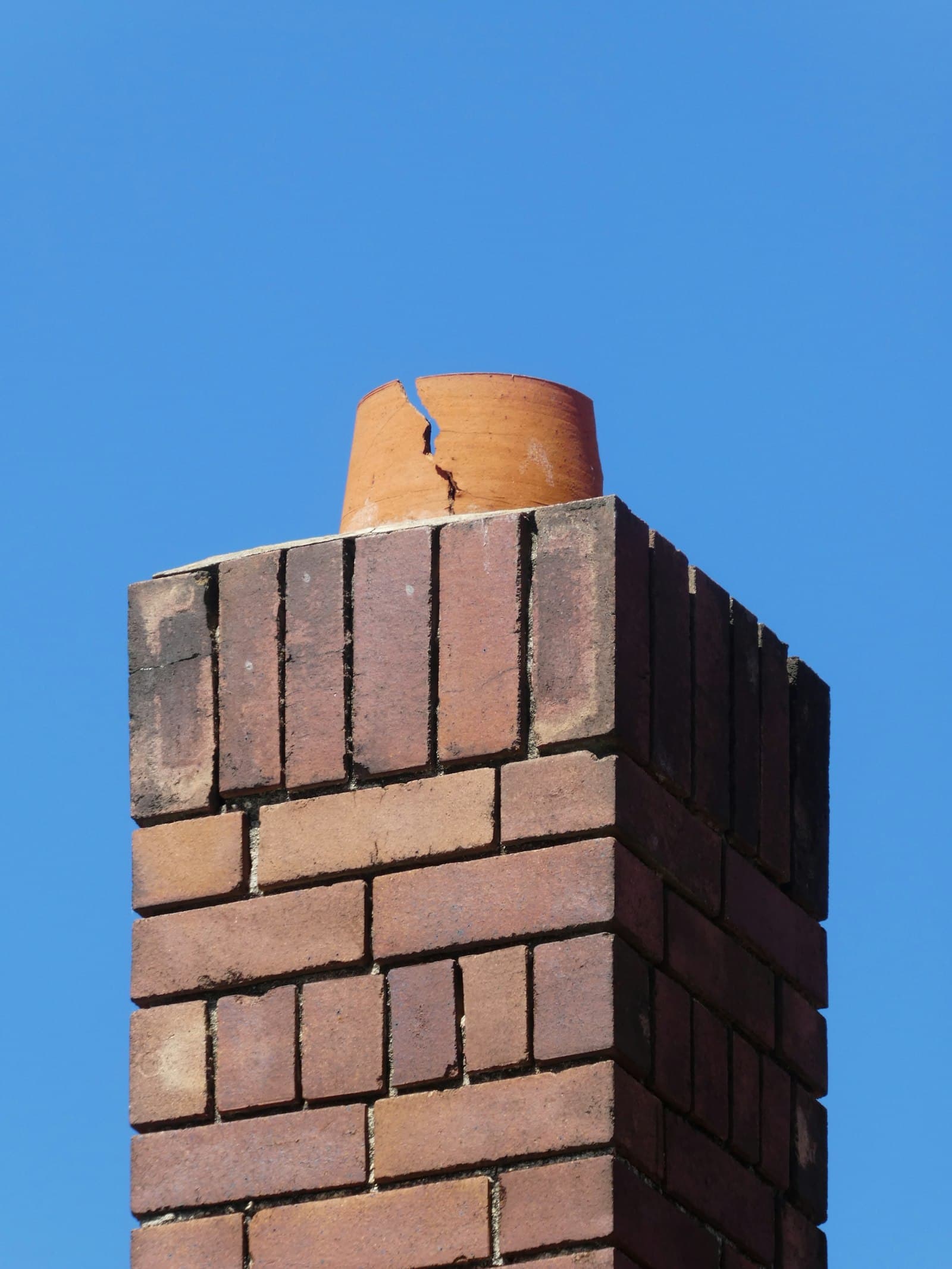
- Cracked or missing mortar joints. Gaps between bricks let water pour straight into the chimney structure. South Florida's humidity and temperature swings widen these cracks over time.
- Spalling brick. When the face of a brick flakes, pops, or crumbles off, that is spalling, caused by trapped moisture pushing outward. It weakens the entire stack.
- A cracked or deteriorating crown. The crown is the concrete or mortar cap at the very top. Cracks here funnel water directly down into the chimney, so a failing crown is a major source of leaks.
- Damaged or missing flashing. Flashing is the metal seal where the chimney meets the roofline. Loose, rusted, or improperly sealed flashing is a frequent cause of chimney leaks.
- A rusted or missing chimney cap. Without a sound cap, rain falls straight down the flue. On the coast, an undersized or low-grade cap corrodes quickly in the salt air.
How South Florida's Climate Makes It Worse
Coastal homes face challenges that inland properties simply don't. Salt exposure can accelerate corrosion of metal caps, dampers, and flashing. The intense humidity keeps masonry damp for longer stretches, giving water more time to penetrate. And during hurricane season, wind-driven rain can be forced sideways into gaps that ordinary rainfall may not reach. Material selection should follow the installed system, existing assembly, measured exposure, dimensions, code, manufacturer guidance, and approved project requirements.
What Happens If You Ignore the Signs
Small leaks rarely stay small. Water that enters through a cracked crown or failed flashing can rot roof decking, ruin insulation, stain and warp drywall, and eventually compromise the structural stability of the chimney itself. A leaning or crumbling chimney is both a safety hazard and a far more expensive repair than the original problem would have been. Moisture also feeds mold, which affects indoor air quality. Addressing water intrusion promptly often costs a fraction of what major structural restoration runs later. Exact pricing depends on the source and extent of the damage, which is why a hands-on assessment is needed for a project-specific number.
What to Do When You Spot Water Damage
If you notice any of these warning signs, the first step is a proper inspection to pinpoint exactly where water is getting in. Leaks can be deceptive: the stain on your ceiling might originate several feet away at the flashing or crown. Once the source is identified, targeted chimney leak repair can stop the intrusion, whether that means resealing flashing, rebuilding a cracked crown, repointing mortar joints, or replacing a corroded cap.
After repairs, protecting the masonry going forward is just as important. Professional chimney waterproofing applies a breathable sealant that keeps rain out while still letting trapped moisture escape, a crucial distinction in our humid climate where sealing in dampness would cause its own problems. When appropriate for the diagnosed source and substrate, repair and compatible waterproofing can reduce future water entry.
How to Request Chimney Service
For non-emergency chimney or fireplace service in West Palm Beach, call (561) 830-5154 to request a free inspection and written estimate. Request a written estimate with materials, exclusions, and any applicable warranty terms before approving work. Review chimney leak repair for service details.
Water showing up around your chimney? Find the likely source
Five questions about where the water shows up and when it shows up, and it narrows the list to the part that is letting it in.
Need chimney or fireplace help in West Palm Beach?
Call with the property ZIP code and a short description of what you see.
Call (561) 830-5154