

The short answer
The crown is the sloped masonry slab covering the entire top of the chimney, sealing the brickwork around the flue and shedding rain off the edges. The cap is the smaller metal cover over the flue opening itself. Flue tiles stand proud of the crown, and the gap between them is a flexible expansion joint, not mortar.
If you've ever had a contractor mention a problem with your "crown" or your "cap," you may have nodded along without being entirely sure which part they meant. The two terms get used interchangeably in everyday conversation, but they describe two completely different components sitting at the top of your chimney. Each one does a separate job, fails in a different way, and is repaired or replaced using different materials and methods. Knowing the difference helps you understand quotes, prioritize repairs, and avoid paying for the wrong fix.
The Quick Answer
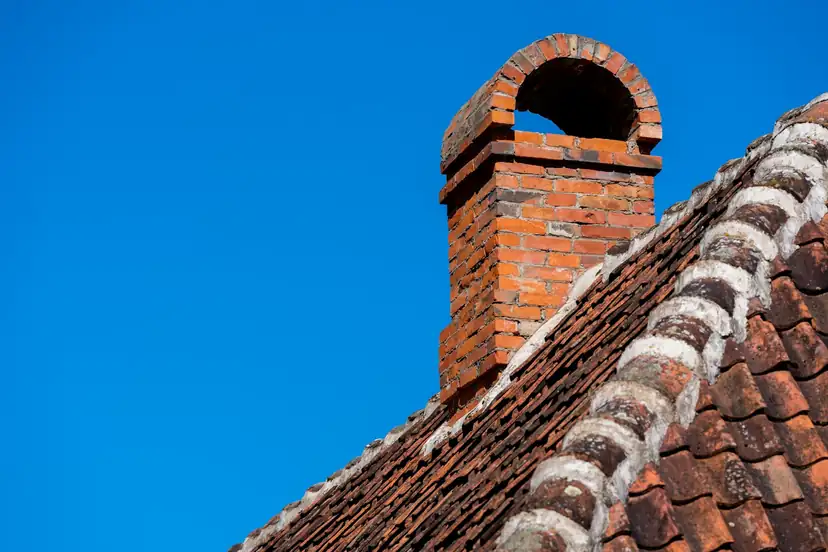
The chimney crown is the large, sloped slab of masonry (or sometimes cast concrete) that covers the entire top of the chimney structure, sealing the brick or block around the flue. The chimney cap is the smaller metal cover that sits on top of the flue opening itself, like a little roof with screened sides. In short: the crown protects the masonry, and the cap protects the flue. A complete, healthy chimney top has both.
What a Chimney Crown Does
The crown is the chimney's first line of defense against the weather. Picture the top of your chimney as a flat masonry surface several inches thick. Without a crown, rain, snowmelt, and humidity would soak straight down into the porous brick and mortar below. A properly built crown is sloped away from the flue so water sheds outward and drips off the edges rather than pooling. Many well-constructed crowns also include a small overhang, called a drip edge, that throws water clear of the chimney's vertical face.
A crown uses a compatible cementitious assembly and geometry intended to shed water, while exact materials and detailing depend on the existing chimney, dimensions, exposure, code, and project requirements. In a coastal, humid climate like South Florida's, the crown takes a relentless beating from salt air, intense sun, and wind-driven rain, which is why crown condition is one of the first things worth checking after storm season.
Signs Your Crown Needs Attention
- Hairline or larger cracks across the crown surface
- Spalling or flaking concrete, where chunks have begun to break away
- Crumbling mortar joints just below the crown
- Water stains on the ceiling or walls near the chimney indoors
- A flat (non-sloped) crown that lets water sit and pool
Small cracks can often be sealed before they spread, but a badly deteriorated crown lets water migrate into the chimney structure, where constant moisture and salt quietly destroy the masonry from the inside. Because a failing crown threatens the entire chimney, prompt chimney crown repair is usually money well spent compared with the far larger cost of rebuilding spalled brickwork later.
What a Chimney Cap Does
If the crown is the chimney's roof, the cap is the screen door over its chimney's opening. The cap is a metal cover, typically with a small lid raised on legs and mesh sides, that sits directly over the flue. It performs several jobs at once:
- Keeps rain out of the flue. Water that falls straight down the flue corrodes the liner, dampens the firebox, and can carry creosote odor into the house.
- Blocks animals. Birds, squirrels, raccoons, and rodents love the warm, sheltered shaft of a chimney. A capped flue keeps them out and prevents nests that block airflow.
- Stops embers and debris. The mesh acts as a spark arrestor, catching burning embers before they land on your roof, and keeps leaves and twigs from collecting inside.
- Improves draft. A good cap can reduce wind-driven downdrafts that push smoke back into the room.
Material selection should follow the installed system, existing assembly, measured exposure, dimensions, fabrication, fastening, code, manufacturer guidance, and approved project requirements. Different alloys and repair mortars have different properties, but no single material is required by geography alone.
Signs Your Cap Needs Attention
- The cap is visibly rusted, dented, or missing entirely
- You hear or see animals getting into the chimney
- Debris, twigs, or nesting material is collecting in the flue
- Rain noise or moisture inside the firebox
- The mesh is torn, crushed, or clogged
Crown vs. Cap: Side by Side
Here is the difference distilled to its essentials:
- Location: The crown covers the whole top of the masonry; the cap covers only the flue opening.
- Material: Crowns use a compatible cementitious assembly; caps use a listed, compatible metal component selected for the system and exposure.
- Job: The crown sheds water off the brickwork; the cap keeps rain, animals, and embers out of the flue.
- Size: The crown is large and structural; the cap is small and removable.
- Failure mode: Crowns crack and spall; caps rust, clog, or blow away.
A useful way to remember it: the crown is part of the chimney, while the cap is a fixture installed onto it. You could replace a cap in an afternoon, but rebuilding a crown is masonry work.
Why You Really Want Both
These two components work as a team, and a gap in either one undermines the other. A perfect crown with no cap still lets rain pour straight down the flue and invites animals inside. A quality cap on a cracked crown still leaves the masonry soaking up water and slowly crumbling. When water gets past either defense, the damage tends to compound: a wet flue liner deteriorates, saturated brick spalls, mortar joints open up, and what started as a minor repair becomes a major rebuild.
This is why a thorough chimney inspection generally looks at the crown and the cap together, along with the flashing where the chimney meets the roof. In humid, storm-prone regions, that top-of-chimney assembly is the main moisture barrier protecting everything below it.
Bottom Line
The crown is the sloped masonry slab that keeps water off your chimney's structure; the cap is the metal cover that keeps rain, animals, and sparks out of the flue. They are different parts with different jobs, and a well-maintained chimney needs both in good condition. If you're not sure which one is causing a problem, or whether yours are even there, a quick look from a chimney professional will tell you exactly where you stand.
For non-emergency chimney or fireplace service in West Palm Beach, call (561) 830-5154 to request a free inspection and written estimate. Request a written estimate with materials, exclusions, and any applicable warranty terms before approving work. Review chimney crown repair for service details.
Need chimney or fireplace help in West Palm Beach?
Call with the property ZIP code and a short description of what you see.
Call (561) 830-5154