

The short answer
Many chimney systems benefit from a compatible cap, but the need and design depend on the appliance, flue, listing, manufacturer instructions, dimensions, clearances, code, fuel, exposure, and existing termination. A cap can help limit direct rain, debris, and animal entry; it must not be assumed interchangeable or added in a way that restricts required venting.
A chimney cap sits at the flue termination and can help limit direct rain, debris, and animal entry on many systems. It is not a universal add-on: the need, design, size, clearances, attachment, and materials depend on the appliance, flue, listing, manufacturer instructions, code, fuel, and exposure.
Let's walk through exactly what a chimney cap does, what happens when you don't have one, and how to tell whether yours is doing its job.
What a Chimney Cap Actually Does
A chimney cap is a covering, usually made of metal, that fits over the top of the flue opening. A good cap combines a solid top (like a small roof) with mesh sides. That simple design quietly handles four distinct problems.
1. It keeps water out of the flue
This is the big one. Your chimney's flue is essentially an open pipe pointing straight at the sky. Without a cap, rain can send water directly down into the flue, where it soaks the liner, the smoke chamber, the damper, and the surrounding masonry. Over time that moisture rusts steel components, erodes mortar joints, and breaks down the liner from the inside.
In a humid, storm-prone climate, this matters even more. Frequent heavy rain and tropical downpours mean an uncapped flue takes on water far more often than chimneys in dry regions. Water is what takes masonry chimneys apart (the Chimney Safety Institute of America notes it does more damage to masonry chimneys than fire), and an uncapped flue is an open invitation. If you are already noticing stains, damp odors, or dripping sounds, a cap is part of the fix, though existing damage may also call for dedicated chimney leak repair to address what the water has already affected.
2. It blocks animals and debris
An open flue is a warm, sheltered, vertical tunnel, which is exactly what birds, squirrels, raccoons, and other animals look for when nesting. Once an animal gets in, you may be dealing with nests that block airflow, animals that die in the flue and create odors, or even a creature loose in your firebox. The mesh sides of a cap stop animals from entering while still letting smoke escape.
The same mesh keeps out leaves, twigs, and windblown debris. A flue clogged with organic material restricts draft and, in the worst case, becomes a fire hazard when it ignites.
3. It stops downdrafts and blowback
Wind blowing across an open flue can push air, smoke, and odors back down into your home. A capped chimney, especially one with the right design, helps stabilize the draft so smoke goes up the way it should instead of into your living room. If you have ever lit a fire and had the room fill with smoke on a windy day, an uncapped or poorly capped flue may be part of the reason.
4. It catches sparks and embers
The mesh on a cap also acts as a spark arrestor. When you burn wood, hot embers can rise up the flue and drift out the top. On a dry roof, in dry landscaping, or near a neighbor's property, those sparks are a genuine fire risk. The cap's screen catches them before they escape.
What Happens Without One
To understand the value of a cap, look at what an uncapped chimney tends to develop over time:
- Spalling and cracked masonry. Water seeps into brick and mortar, then expands and contracts, breaking the material apart from within.
- A rusted, failing damper. The metal damper sits directly in the path of incoming rain and corrodes until it no longer seals or moves.
- A deteriorating flue liner. Moisture and acidic byproducts attack the liner, which is your primary safety barrier against heat and combustion gases.
- Interior water stains. Water that travels down the flue often shows up as discoloration on ceilings and walls near the chimney.
- Nests, odors, and blockages. Animals and debris reduce draft and create unpleasant, sometimes hazardous, conditions.
Items on that list can cost more to repair than a quality cap costs to install. That is why the cap is one of the best returns on investment in the entire chimney system.
Do You Already Have One? How to Check
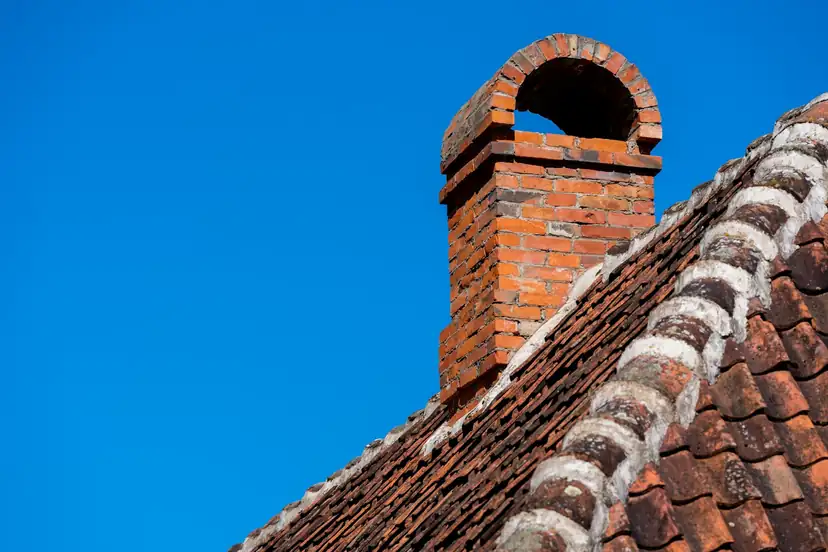
From the ground, look up at the top of your chimney. A cap appears as a small metal hood or box sitting over the flue opening. If the top of the chimney looks flat and open, you likely don't have one, or it has blown off or corroded away.
If a cap is present, it can still fail. Watch for these warning signs:
- Visible rust, holes, or sagging in the cap.
- A cap that has shifted, loosened, or is missing fasteners.
- Crushed or torn mesh that no longer keeps animals out.
- Water stains, damp smells, or animal noises despite a cap being in place.
A cap that is rusted through or knocked loose by a storm is no longer protecting anything. Because caps live in the harshest spot on the house, exposed to sun, wind, salt air, and driving rain, they do wear out and need eventual replacement.
Material Matters in Coastal Climates
Material selection should follow the installed system, existing assembly, measured exposure, dimensions, fabrication, fastening, code, manufacturer guidance, and approved project requirements. Different alloys and repair mortars have different properties, but no single material is required by geography alone.
Sizing and fit matter too. A cap that is too small won't seal the flue properly, and one that is poorly secured can lift off in high winds. Proper measurement and secure mounting are what make the difference between a cap that lasts and one that becomes debris in the next storm. Correct chimney cap installation ensures the cap matches your flue dimensions and is fastened to withstand hurricane-season gusts.
Single Flue vs. Multi-Flue and Full Covers
Most chimneys have a standard single-flue cap that covers one flue opening. Chimneys with more than one flue, or with an exposed crown, may benefit from a multi-flue cap or a full top-mount cover that protects the entire top of the chimney, including the crown, from water. The right choice depends on your chimney's construction, and it is worth having someone look at it rather than guessing from the ground.
The Bottom Line
Once you have decided you want one, the follow-up question is how long it will last and when it is due for replacement, which is covered in how often you should replace a chimney cap.
So, do you really need a chimney cap? For many homes with a compatible working chimney system, a correctly specified cap can help limit rain, animal, debris, downdraft, and ember entry. The right answer still depends on the appliance, flue, termination, listing, manufacturer instructions, dimensions, clearances, code, fuel, and exposure. If your chimney has no cap, a rusted one, or one that took a beating in the last storm, addressing it is one of the smartest, most affordable steps you can take to protect the whole system.
For non-emergency chimney or fireplace service in West Palm Beach, call (561) 830-5154 to request a free inspection and written estimate. Request a written estimate with materials, exclusions, and any applicable warranty terms before approving work. Review chimney cap installation for service details.
Need chimney or fireplace help in West Palm Beach?
Call with the property ZIP code and a short description of what you see.
Call (561) 830-5154