Most homeowners think creosote buildup is just an unavoidable part of owning a fireplace. The truth is that how you build, fuel, and tend your fire has an enormous effect on how much creosote ends up coating the inside of your chimney. A smoky, smoldering fire can glaze your flue with sticky, flammable deposits in a single season. A hot, clean-burning fire produces a fraction of that. The good news is that building a better fire is a skill anyone can learn, and it pays off in safety, efficiency, and lower maintenance.
What Creosote Actually Is
When wood burns, it releases gases, moisture, and unburned particles. When those byproducts hit the cooler surfaces inside your chimney, they condense and stick to the flue walls. That residue is creosote. In its early stage it looks like soot or flaky black dust, but as it accumulates and gets reheated, it can harden into a shiny, tar-like glaze that is extremely difficult to remove and highly flammable. Creosote is the leading cause of chimney fires, which is exactly why reducing it at the source matters so much.
Three things drive creosote formation: burning wet or unseasoned wood, restricting airflow so the fire smolders, and letting the fire and flue run too cool. Control those three variables and you control most of your buildup.
Start With the Right Wood
Wood quality is the single biggest factor in a clean burn. Always burn seasoned hardwood that has been split and dried for at least six months to a year, ideally with a moisture content around 15 to 20 percent. Well-seasoned wood is lighter than it looks, has cracks radiating from the ends, and makes a hollow knock when two pieces are struck together. Hardwoods like oak and hickory burn hotter and longer than soft woods.
Here in South Florida, our humidity works against you. Wood stored outdoors absorbs moisture from the air, so even "dry" wood can carry more water than you expect. Keep your firewood off the ground on a rack, cover the top of the stack while leaving the sides open for airflow, and bring a day's supply indoors ahead of time so it can shed surface moisture.
- Never burn: green or freshly cut wood, construction scraps, painted or treated lumber, plywood, or driftwood. These release moisture, chemicals, and salts that accelerate creosote and corrode your flue.
- Avoid: burning cardboard, glossy paper, or trash, which create flyaway embers and dirty smoke.
Build the Fire the Smart Way
How you stack your fire matters more than most people realize. The traditional method of crumpled paper, kindling, and a couple of logs on top works, but the top-down method burns noticeably cleaner.
The Top-Down Method
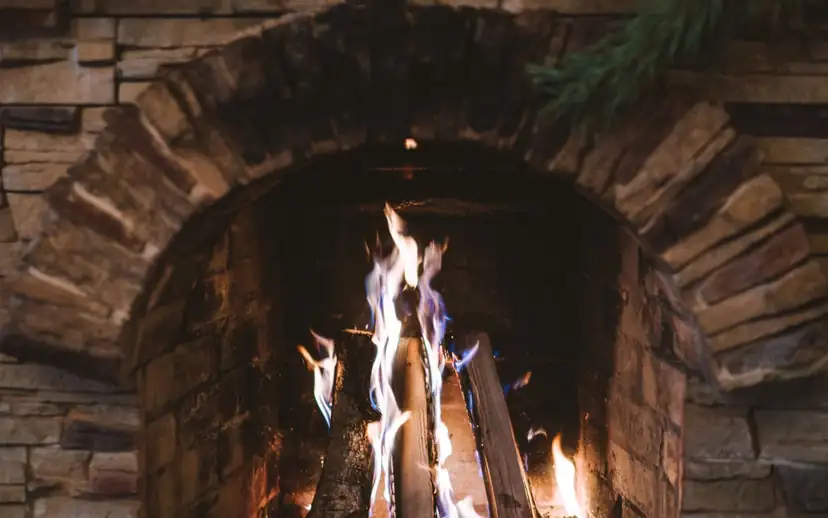
Place your largest split logs on the bottom of the firebox, parallel to each other. Add a layer of smaller logs crosswise on top, then a layer of kindling, and finally your tinder and a natural fire starter at the very top. Light it from the top. The fire burns downward, igniting the gases released by the wood below it before they can escape up the chimney as smoke. The result is a fire that lights cleanly, needs less fussing, and produces far less creosote-forming smoke during startup.
Give the Fire Plenty of Air
A fire needs oxygen to burn hot and complete. The most common mistake homeowners make is choking down the air supply to make a fire "last longer" overnight. That low, smoldering burn is exactly the condition that produces the most creosote. Instead, open the damper fully and let the fire breathe.
Before lighting, prime a cold flue by holding a rolled, lit piece of newspaper up near the open damper for a few seconds. This warms the air in the chimney and establishes an upward draft so smoke goes up instead of rolling back into the room. Once your fire is established, keep flames active and bright. If you see thick smoke pouring from your chimney top, your fire is starved for air or your wood is too wet.
Keep It Hot, Keep It Clean
A hot flue resists creosote because the byproducts stay as gas and exit the chimney rather than condensing on cool walls. Burn smaller, hotter fires rather than one giant smoldering pile. Add wood in modest amounts to maintain steady, vigorous flames. Resist the urge to load the firebox to capacity and damp it down. A clean burn leaves a bed of fine gray ash and a relatively clear glass door, while a dirty burn leaves heavy black soot quickly.
Habits That Protect Your Chimney Year-Round
- Let ashes cool fully, then leave about an inch on the firebox floor to help insulate and ignite the next fire. Clear out excess ash regularly.
- Watch your smoke. Clean-burning fires produce a thin, nearly invisible heat shimmer at the chimney top, not a steady plume.
- Keep glass doors open during active burning for better airflow, and close them once you are down to coals.
- In our coastal climate, watch for moisture intrusion and corrosion. Salt air and heavy rain are hard on caps, crowns, and flues, and a deteriorating chimney burns dirtier.
Good Burning Reduces Buildup, but It Doesn't Replace Maintenance
Even with flawless technique, every wood fire deposits some creosote. That is simply chemistry. Burning clean dramatically slows the rate of accumulation, but it does not eliminate the need to have the flue inspected and cleaned. Buildup is invisible from your living room, and the only way to know what is actually coating your flue is to have it looked at by a professional. We generally recommend an annual evaluation for anyone who burns regularly, and more often for heavy users.
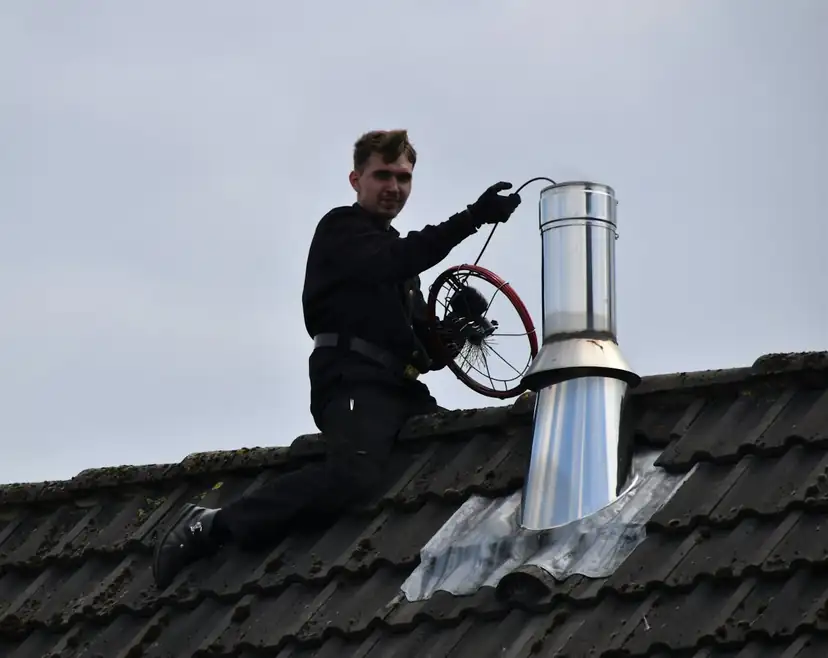
A professional chimney cleaning removes accumulated creosote and soot before it reaches a dangerous level, and a thorough inspection by a trained chimney sweep can catch early problems like cracked masonry, a failing crown, or a compromised cap before they turn into expensive repairs. Pairing smart burning habits with regular service is the most reliable way to keep your fireplace safe and efficient for years.
Burn Smarter This Season
Building a better fire comes down to dry hardwood, a top-down build, generous airflow, and a hot, active burn. Do those four things consistently and you will produce a fraction of the creosote, get more heat from every log, and reduce your risk of a chimney fire. When it is time to back up those good habits with a professional cleaning or inspection, Chimney Repair West Palm Beach is here to help. We are locally owned, fully insured, and offer same-day scheduling and a free written estimate. Call us at (561) 709-7979 or learn more about our chimney cleaning services to keep your fireplace burning safely all season.
Tips in West Palm Beach — the local, insured option
When West Palm Beach homeowners search "chimney repair West Palm Beach", "chimney repair near me", or "chimney sweep near me", they want a locally owned, insured local crew that picks up the phone, writes the estimate before touching the chimney, and stands behind the work in writing. That is the entire model here.
Whatever the job, that means documentation first, a free written estimate, and tips built for the Florida-coastal climate. South Florida chimneys are not inland chimneys — coastal salt air corrodes caps and flashing faster, tropical humidity keeps masonry damp for months, and storm-pressure cycles open mortar joints. Any tips done in West Palm Beach has to account for that, or it fails early.
Tips pricing in West Palm Beach — what homeowners actually pay
National chimney sites keep tips pricing intentionally vague. Ours is not. Here is what actually moves the number on a West Palm Beach tips job:
- chimney height, roof pitch, and access
- materials grade — 316 marine-grade hardware inside the coastal salt-air line
- scope uncovered during the baseline inspection
- documentation needs for insurance or resale
- emergency vs. routine scheduling
What we will not do is bait-and-switch you with a low online quote and add charges on the invoice. The number on the free estimate is the number you are invoiced. If something hidden surfaces mid-job we stop, photograph it, quote the change, and only proceed with your approval — which is why "best tips near me" searches keep finding us instead of the cheapest bid.
What to expect when you book tips in West Palm Beach
Every tips appointment in West Palm Beach runs the same predictable way. You call (561) 709-7979 and a real technician answers; we ask what is happening and book a fixed arrival window, often same-day. An insured West Palm Beach technician arrives on time, inspects and photographs the chimney, scopes the flue if the job calls for it, and sends a free written estimate the same business day — before any work is scheduled.
When the tips work is done you get a report within one business day: before-and-after photos, a plain-language summary, warranty paperwork, and insurance-ready documentation on request. We follow up about a week later to confirm everything is right — and if it is not, we come back at no charge.
How tips differs by West Palm Beach home type
West Palm Beach housing stock is unusually varied — Mediterranean Revival waterfront in El Cid, mid-century ranches in Pleasant City, 1920s cottages in Old Northwood, and newer stucco-on-block infill across Westgate and the South End. Tips is approached a little differently on each: historic homes prioritize crown, flashing, and cap condition, while newer homes more often involve factory-built and gas systems. Waterfront properties get marine-grade hardware that resists salt-air corrosion.
How we compare to other West Palm Beach tips options
Homeowners searching "top-rated tips near me" or "local tips west palm beach" in West Palm Beach are usually weighing three options: national franchises that route your call to a central dispatcher and bake a premium into the bill, handyman generalists who quote cheap but are not chimney specialists and often miss what a specialist catches, and local insured specialists like us. Our tips pricing sits between the two — competitive, done by trained technicians, documented, and warrantied in writing.
Where we provide tips near you in West Palm Beach
We provide tips across every West Palm Beach neighborhood, including Prospect Park, Grandview Heights, Pleasant City, Mango Promenade, Vedado, Roosevelt Estates, Pine Wood Park, Westgate, plus the Okeechobee, Forest Hill, and Belvedere corridors. We also cover the neighboring Palm Beach County communities — Haverhill, Cloud Lake, Glen Ridge, Atlantis, Lake Clarke Shores, Lantana, and the rest of the immediate metro. We come to you; if you are unsure whether we reach your address, call (561) 709-7979.
Serving every West Palm Beach ZIP — 33401, 33402, 33405, 33406, 33407, 33409, 33411, 33415, 33417 — with the same crew, standards, and pricing transparency on every tips job.
What you get with our tips in West Palm Beach
120+ verified West Palm Beach reviews, a 4.8 average, and repeat customers in every neighborhood. The phone answered by a real technician, not a call center. Insurance-ready documentation, same-day real-estate reports, and a workmanship warranty on every tips job. Call (561) 709-7979 or use the estimate form on this page and we will be in touch within one business day.
- Locally based in West Palm Beach — locally owned, not a national franchise. We come to you.
- Fully insured for Florida residential chimney and fireplace work — certificate of insurance on request.
- Free estimates before tools come out, and the quoted number is the invoiced number.
- Documented tips — before-and-after photos and a workmanship warranty in writing.