

The short answer
A brown ceiling stain near a chimney may come from flashing, the crown, cap, masonry, roofing, plumbing, condensation, or another pathway. Flashing uses coordinated pieces at the roof-to-chimney joint, but stain location alone cannot identify which detail failed. Trace the entry path and affected materials before approving flashing repair or broader roof work.
You notice a faint brown ring on the ceiling near where the chimney passes through. Later it appears darker or the finish changes. You call a roofer, they walk the shingles, and they tell you the roof looks fine. So where is the water coming from? In Palm Beach County, one possible source is the chimney flashing.
What Chimney Flashing Actually Does
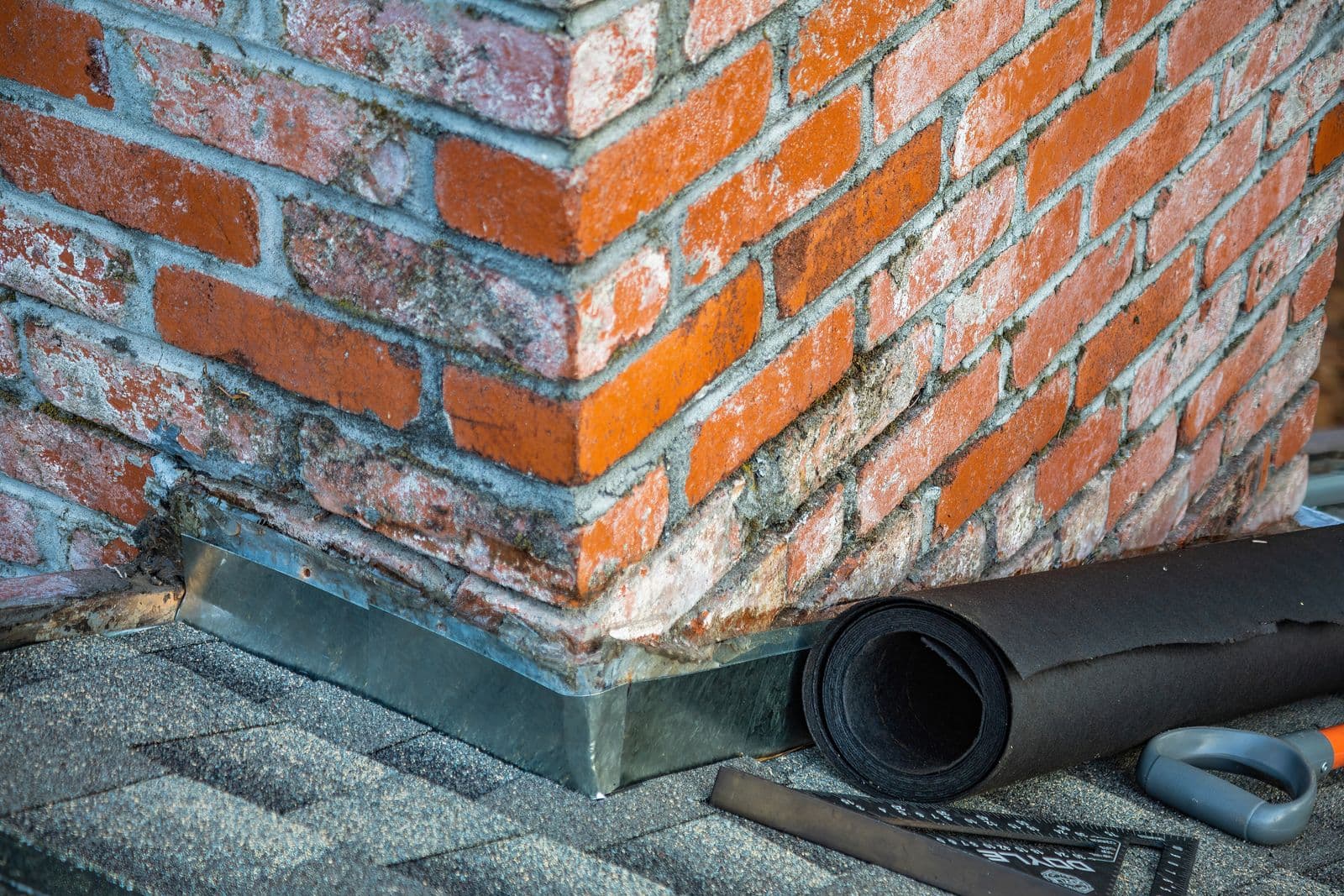
Flashing is the system of metal pieces that seals the joint where your chimney meets the roof. It's not one part; it's several working together: step flashing tucked under each course of shingles, counter flashing set into the chimney's mortar joints, and base or apron flashing across the front. Done right, this metalwork channels rainwater away from the most vulnerable seam on your entire roof.
The problem is that this seam is exposed to heat, movement, sun, and rain. Metal expands and contracts with heat. Sealant dries out. Mortar joints erode. And here in South Florida, the climate accelerates several of those failure modes.
Why Flashing Fails Faster in West Palm Beach
Coastal Palm Beach County exposes exterior metal and masonry to salt, humidity, sun, and wind-driven rain. A few local factors stack up against your flashing:
- Salt air corrosion. Homes in Palm Beach, Riviera Beach, Lake Worth Beach, and anywhere near the Intracoastal get a constant fine mist of salt. Older galvanized or aluminum flashing corrodes from the edges inward, potentially opening pinholes that may not be visible from the ground.
- Wind-driven rain. Our afternoon storms don't just drop rain straight down. They push it sideways and upward under shingles and flashing laps. Water that may not penetrate under vertical rain can be forced into vulnerable laps.
- Hurricane and tropical-storm flexing. High winds rack the roof structure and lift shingle courses, breaking the seal between step flashing and counter flashing.
- Heat and humidity cycling. Daily expansion and contraction in our heat fatigues sealant and old caulk joints, which crack and pull away from the masonry.
Together, those factors can shorten flashing service life, but condition, materials, detailing, roof movement, exposure, and maintenance matter more than a universal age estimate.
How to Tell It's the Flashing and Not the Roof
The location of the stain is your biggest clue. Roof leaks tend to wander, because water travels along rafters before it drips, so the stain can show up feet away from the actual entry point. Flashing-related leaks may appear in patterns such as:
- A stain that hugs the ceiling or wall directly adjacent to the chimney chase.
- Discoloration that gets noticeably worse during or right after a heavy storm, then dries between rains.
- A musty smell in the attic near the chimney, or visible water tracks on the chimney brick inside the attic space.
- Rust streaks, gaps, or peeling sealant visible at the chimney-to-roof joint from the roof or a ladder.
- White, chalky mineral deposits (efflorescence) on the exterior brick, a sign water is moving through the masonry.
If your stain matches several of these, the flashing should be included in the leak assessment. The good news is that a focused chimney flashing repair is far less invasive and less expensive than the full roof replacement many homeowners fear when they first see water damage.
What a Proper Repair Looks Like
A real fix is not a tube of roofing tar smeared over the gap. Surface-applied roofing cement may not correct failed laps, counterflashing, masonry joints, or hidden damage, and it can obscure the entry point without providing a durable system repair. A durable repair addresses the system:
- Removing failed or corroded flashing rather than caulking over it.
- Installing properly lapped step and counter flashing, with counter flashing cut into a fresh mortar joint and not just surface-glued.
- Using corrosion-resistant metal suited to a coastal setting, which matters when salt air is what killed the original in the first place.
- Repointing eroded crown and mortar joints with a compatible repair material selected for the existing assembly and exposure so water stops migrating through the masonry itself.
Because flashing problems and masonry problems often travel together here, a thorough inspection looks at the crown, cap, and brick at the same time. Catching all of it in one visit is what stops the stain from coming back next storm season.
Fix the Flashing Before It Reaches the Framing
If you have ruled flashing out, or you are not sure where to start, why chimneys leak in the Florida rainy season works through the other entry points a chimney has.
That brown ring may be an early warning before water affects a wider area. Left alone, chimney water intrusion moves into drywall, attic insulation, framing, and eventually the chimney's own structure, and in our humidity it invites mold along the way. What starts as a small chimney leak repair can grow into a framing and ceiling rebuild if it's ignored through a rainy season.
For non-emergency chimney or fireplace service in West Palm Beach, call (561) 830-5154 to request a free inspection and written estimate. Request a written estimate with materials, exclusions, and any applicable warranty terms before approving work. Review chimney flashing repair for service details.
Water showing up around your chimney? Find the likely source
Five questions about where the water shows up and when it shows up, and it narrows the list to the part that is letting it in.
Need chimney or fireplace help in West Palm Beach?
Call with the property ZIP code and a short description of what you see.
Call (561) 830-5154